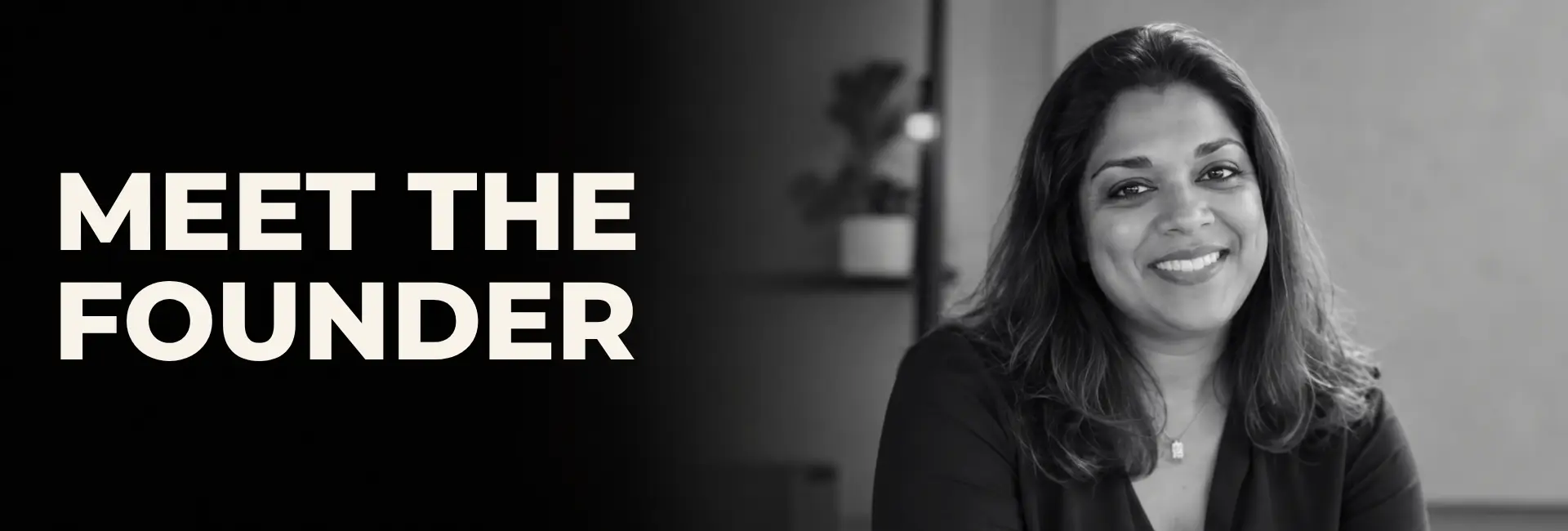
I’m Sonia Soowambar, founder of We’re Good. Paris-born, Brixton-raised, with a life and career that have moved between corporate, charity and community settings.
The route here has not been particularly linear or traditional.
It has been shaped by family, caring, work, faith, culture and different places, as well as a fiercely independent streak, a strong sense of autonomy and a tendency to challenge things rather than accept “that’s just how it is.”
That has meant asking awkward questions, taking ownership and finding my own way forward, particularly when something does not feel right or could work better.
I was born in Paris and moved to Brixton with my family when I was five.
London has been home for most of my life, with periods spent living, studying and working elsewhere, including Paris, Williamsport Pennsylvania and Toulouse.
Coming back to Brixton after time away made gradual change much easier to see: a familiar business gone, a street feeling different, somewhere becoming more expensive or something entirely new taking its place.
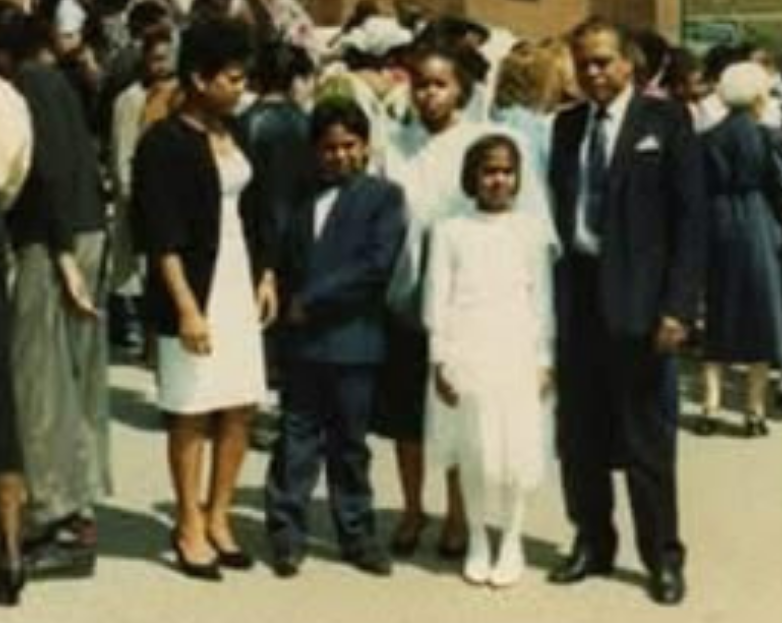
My brother and me on our First Holy Communion at the Holy Rosary on Brixton Road.
My Mauritian background, family life, faith and Brixton upbringing all shaped an idea of community that was never particularly formal.
It was simply about knowing people, showing up and contributing where you could.
Caring became part of my life early.
My dad lived with alcoholism. As a child, I once wrote to then Prime Minister John Major asking why more was not being done to help people like him. Mum posted the letter, and a reply came back.
I did not have the language for systems, policy or support. I simply saw something hurting someone I loved and wondered who else could help.
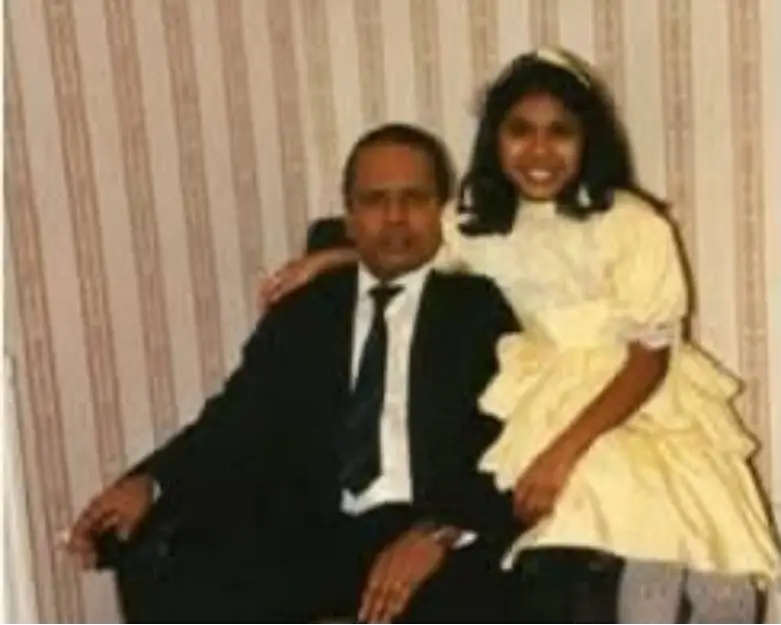
I have no clue when this was taken except it was at Melita’s house. Those were good times.
In my eyes, my Dad was never defined by alcoholism. He was bigger than that: charismatic, wore his heart on his sleeve and loved life (sometimes rather too enthusiastically)! Despite the distance between us and his way of life, we remained very close until he died in 2008, from alcohol-related complications, aged 65.
From my teenage years, I took on increasing responsibility for both of my parents. It began simply: loving them, wanting them to be happy and well, and trying to make their lives easier.
Over time, that became medical appointments, hospitals, advocacy, next-of-kin responsibilities, power of attorney and far more responsibility than I had anticipated.
But caring for them grew out of caring deeply about them.
The responsibility changed. The reason for doing it never did.
I grew up learning two quite different things at the same time.
There was dysfunction, addiction and responsibility at home, and the reality of growing up in an urban area where you learned quickly how to read people, situations and what was going on around you. Over the years, I have needed those instincts around family too.
At the same time, I was raised with strong expectations around manners, generosity, faith, hard work and how you treated people.
Later came education, corporate law, finance and professional environments with very different social and cultural codes. The way people spoke, dressed and behaved could change completely from one room to the next — not only between countries, but between different parts of London.
I learned to move between those worlds almost instinctively. Different languages, different expectations, different ways of carrying yourself. I never really felt that I belonged to only one of them.
I belonged to all of them.
I can be polished and professional. I can also be direct, sceptical and difficult to impress. I understand the language of institutions, but I also know how distant, intimidating or simply strange those same institutions can feel from the outside.
And underneath all of that, I think I have always remained quite soft-hearted.
Both sides are me.
And then there’s my mum, Ivy.
She modelled community long before I understood what it was. If somebody needed feeding, practical help, advice, flowers for a funeral or simply someone to care, she tended to notice, step in and take them under her wing.
Looking back, it was quite surreal growing up. There were always all sorts of people coming in and out of our home, and Mum always seemed to be helping somebody with something. She gave away my toys, my clothes and things from around the house because, as she would say, “people needed them more than we did.”
As a child, I sometimes wondered, “Why are you doing that?” Over time, I stopped questioning it. It simply became normal to me that if somebody needed help and you could do something, you did.
That generosity was never presented as volunteering or community work. It was simply how Mum believed people should be treated, shaped by her own upbringing and her Catholic faith.
Looking back now, I can see how much of that I absorbed without realising it.
Mum and I are very similar in the ways that matter, and completely chalk and cheese in others. She tries my patience all the time(!), but her resourcefulness, work ethic and instinct to make room for others have left a lasting mark on how I approach both life and work.
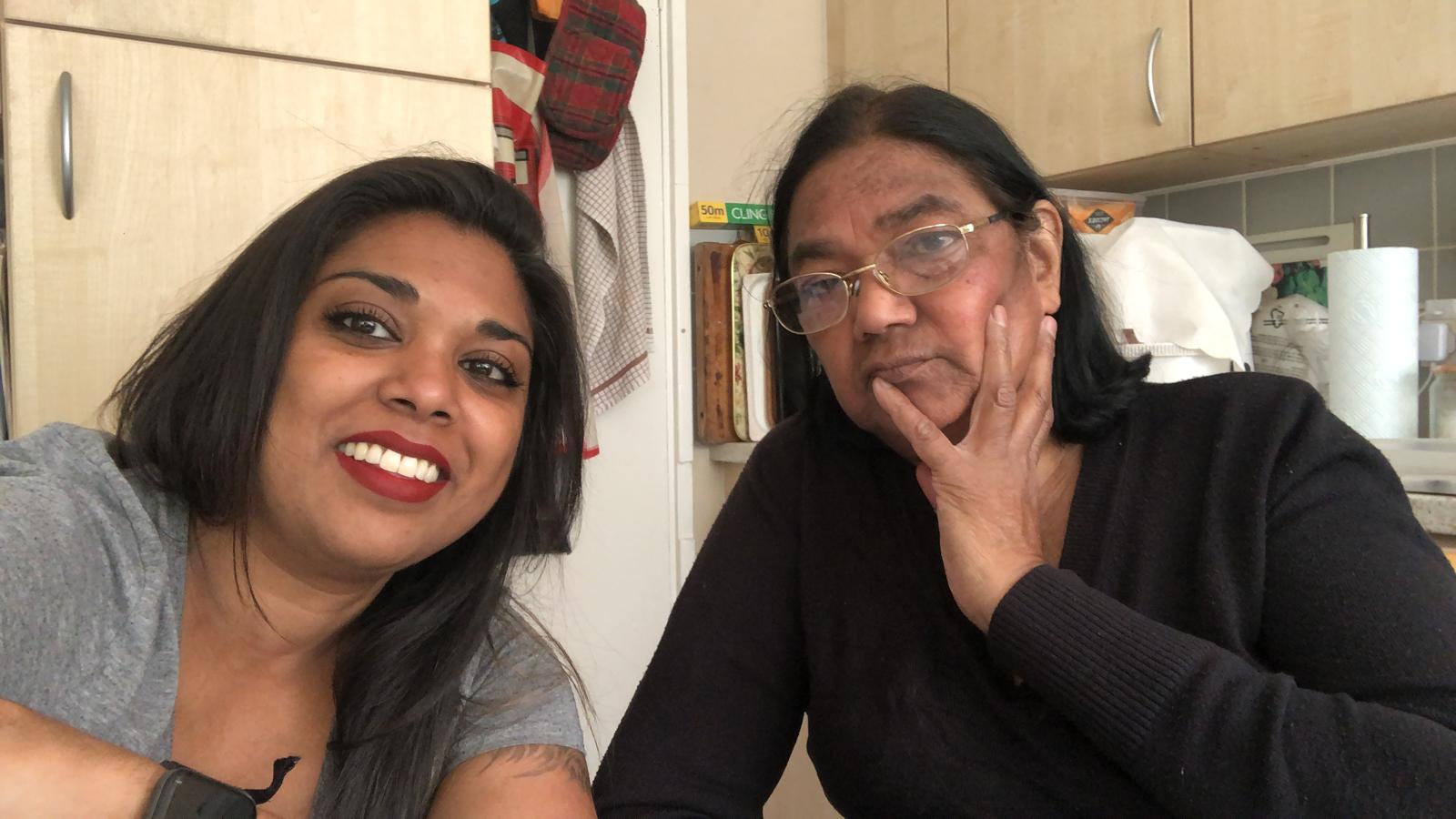
All of those parts meet here.
The professional world taught me about excellence, accountability, organisation and getting things done. It also showed me that I can give a huge amount of myself to work when I believe in what I am doing – sometimes more than is good for me.
Over time, I became less willing to ignore things that felt fundamentally wrong simply because they were established, accepted or difficult to change. I also became tired of giving everything inside structures where that commitment could be relied upon without necessarily giving me the ability to challenge what was not working.
Family and caring taught me that the reality behind words like support, access and carer is usually far messier than the label.
I have always been drawn to organisations that speak about care, inclusion, community and belonging. But I have also learned that the language and the lived experience do not always match.
That gap matters to me.
Living elsewhere and coming home sharpened my interest in place, change and belonging too. I know many people who love Brixton deeply, but increasingly talk about that love in the past tense; about who they knew, where they went and how at home they once felt.
I do not think change is automatically bad. But I do think it is worth asking what changes, who benefits, who still feels part of a place and who gradually stops feeling that it is theirs.
And Mum showed me that community does not always begin with a programme. Sometimes it begins because somebody notices.
We’re Good brings those things together: care with structure, curiosity with follow-through, and a refusal to accept that something should stay the same simply because “that’s how it is.”
If I notice a gap, I want to understand it properly and, where I can, do something useful about it.
To provide the best experience, we use cookies and similar technologies. With your permission, we use Google Analytics to help us understand how people use our website, figure out what's working, and see where we can improve. Consenting allows us to process data like browsing behavior or unique IDs; refusing or withdrawing consent may affect certain site features.